ceci Region n’existe pas dans votre langue, Voir dans: Kiswahili (sw), English (en),
Ou utilisez Google Traduction:  

À propos du centre d’impact

This center was developed to provide ECHO services to help those in East Africa who work with the poor more effectively, especially in  ​​agriculture and alternative methods. ECHO East Africa is a basic training center providing technical assistance to help organizations and community development workers work more effectively to reduce hunger.


Services

  • Conduct research and development on locally appropriate sustainable agriculture practices
  • Collaborate with, and provide networking opportunities for, development agencies working in East Africa
  • Provide garden displays and demonstrations of agricultural options
  • Provide agricultural resources for study
  • Demonstrate alternative training methods, including creative collaboration and exhibitions
  • The ECHO seed bank provides packaged seeds, as well as seed exchange opportunities and seed conservation education
  • Training for home gardens (organic gardens, kitchen gardens, gardens, bags and manufacture of peat)
  • Training and visits to fruit tree nurseries
  • Organization of conferences, workshops, forums, exchange visits, and training in best practices
  • Network between farmers and other development partners
  • Conduct agricultural fairs


Contact:

Charei Munene

ECHO East Africa Impact Center
P O Box 15205
Arusha Tanzania

eastafrica@echocommunity.org


East Africa Bulletins

La création d'engrais bioliquides en Afrique centrale 2025-12-09
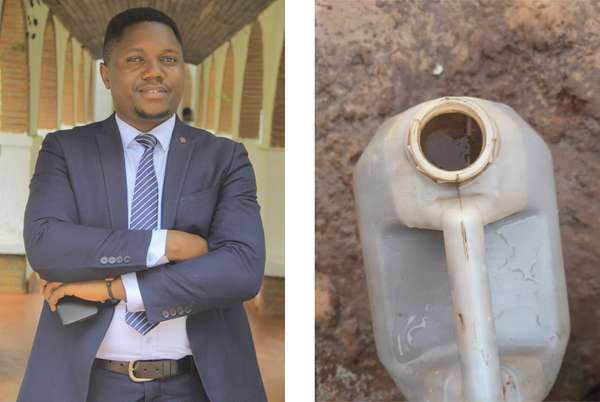
Je suis Kasereka Kaghesi Richard, originaire de l'Est de la RDC, dans la ville de Butembo, et le coordonnateur de l'organisation POID-RDC (Personnes Organisant des Initiatives pour le Développement).Nous exprimons notre sincère gratitude à ECHO, au formateur Hassan Djebro, au facilitateur Mwalimu, ainsi qu'à tous les **autres formateurs** qui continuent de nous soutenir et de renforcer nos capacités.
Malgré les défis matériels, nous avançons avec détermination. La formation reçue nous a permis de transformer de simples ressources locales en un produit utile pour nos communautés. Cela prouve que, même sans ressources importantes, l'innovation et la volonté peuvent produire des résultats tangibles.

Procédure de Production de Notre Biofertilisant
Grâce à la formation reçue de l'organisation ECHO, nous avons suivi les étapes ci-dessous :

  1. Nous avons pris un seau de 20 litres.
  2. Nous avons commencé par ajouter du fumier, des herbes fraîches, deux pelletées de terre, puis de la cendre et de l'eau.
  3. Nous avons également ajouté des os et des plumes d'animaux.
  4. Le mélange a été conservé dans un endroit ombragé.
  5. Chaque matin et chaque soir, nous avons utilisé un bâton d'arbre comme agitateur pour mélanger la préparation.

Ceci est la procédure simple et efficace que nous avons appliquée pour obtenir notre biofertilisant. Nous allons maintenant passer à la phase d'utilisation pour expérimenter notre produit directement sur le terrain et observer ses effets positifs sur nos cultures.

Nous croyons fermement que ce travail est une graine pour un avenir meilleur. Avec l'expérimentation de notre biofertilisant, nous franchissons une nouvelle étape vers l'autonomisation agricole et le développement durable de nos communautés.

À propos East Africa

Food insecurity has increased significantly in East Africa due to the rapid increase in population, with an increase of 150% by 2050. Over 40% of children in East Africa are malnourished. The largest number of these children are orphaned and living in difficult circumstances. Most of the rural population lives in poverty, relying on a subsistence lifestyle. Some of the reasons for this situation include:

  • A High rate of loss of yield
  • Underdeveloped, weak markets, farmers lack the infrastructure to improve thier value chains
  • Minority farmers and herdsmen in the region, don't have adequate access to agricultural services, continuing education or access to formal training
  • Increased pressure forcing families to cultivate a little land, which results in land degradation and loss of sustainability in food production
  • Drought, especially in arid pastoralist areas.
  • Deforestation
  • Flooding
  • Climate

Where we are located

If you are driving North from Arusha, it is 15 km north of the city along A104 (the main road). After you see Mount Meru University on the right, the office will be another half km north and on the right-hand side of the road.
If you are driving South from Nairobi, it is 96 km south of the Namanga border crossing along A104 (the main road). As you see Mount Meru getting closer, pay attention and look for the Habari Maalum Station which will be on the left-hand side of the road.
 
If you come via public transportation, ride the bus (dala dala) from Arusha to Ngaramtoni; then take another bus from Ngaramtoni to the Habari Maalum Radio Station. Guards and staff will be happy to give you directions to the front door of the ECHO office.

Calendrier [ Plus ]