West Africa Regional Resources
About the Impact Center
West Africa is a dynamic and culturally rich region of the African continent, comprising 15 countries with diverse realities but united by a strong common history, notably that of the great pre-colonial empires and trans-Saharan trade. Characterized by a young and rapidly growing population, it possesses significant economic potential, driven by agriculture, natural resources, regional trade, and a globally recognized cultural creativity.
However, the West African region faces profound vulnerabilities, particularly in the agricultural sector, which employs a large portion of the population and forms the basis of food security. Despite varied soils and a favorable climate in several areas, West African agriculture faces multiple challenges: limited access to inputs and financing, land degradation, increased climate variability, biodiversity loss, low yields, and dependence on food imports.
Faced with these difficulties, agroecology appears as a promising path: it relies on local knowledge, crop diversification, sustainable soil management, peasant seeds and the reduction of external inputs. By strengthening the resilience of agricultural systems, improving producers' incomes, and protecting ecosystems, agroecology is gradually establishing itself as a strategic option for ensuring sustainable food security in West Africa.

Services

-
The mission of ECHO's regional impact center can be summarized in a few words:
- Focus on smallholder farmers.
- Identify their training needs.
- Provide solutions for their agriculture by drawing inspiration from their environment.
- Support them on a daily basis.
-
Following the training campaign comes the monitoring and evaluation period. Our training teams provide advisory support to farmers through field visits, phone calls, and social media to ensure the proper implementation of the techniques taught. Thus, producers in Burkina Faso (Ouagadougou, Satiri, Lapara, Siby, Bogandé, Tougan, Beguedo, Dédougou, Bobo-Dioulasso, etc.) and countries in the sub-region (Benin, Cote d'Ivoire, Mali, Niger, Togo, Sierra Leone, etc.) have been monitored and supported in applying the various techniques taught by ECHO.
Trainings are actively underway and are being conducted with communities, partner organizations, and educational institutions. For security reasons, scheduled trainings are not being listed. However, the West Africa Impact Center Team will welcome your interest and inquiry. Please contact e-mail them at: WestAfrica@echocommunity.org
Contact:
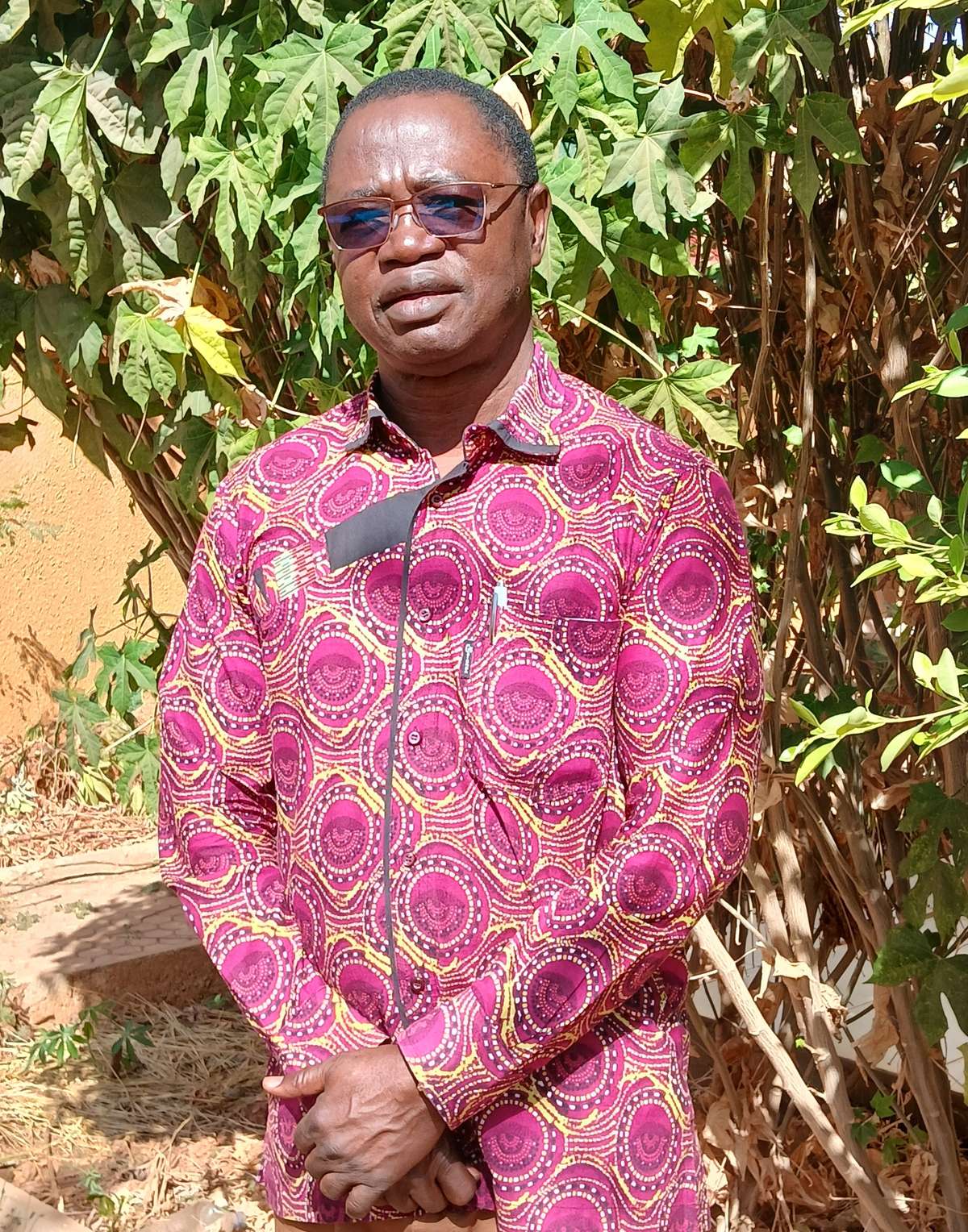
Robert Sanou, Director
Ouagadougou, Burkina Faso
westafrica@echocommunity.org
Tel: +226 25370054
Tel: +226 74190707
Latest Resources: West Africa
Faith and Farming - ECHO West Africa
Farming is often perceived as a dirty, lowly, and undesirable job. The Faith and Farming programme seeks to encourage farmers by highlighting and learning from the many farmers in scripture. We learn about farming through ou...
Integrating Indigenous and Scientific Knowledge for Sustainable Food Systems in Africa: The Plug-In Principle
Review by Robert Walle
The success of the Millenium Development Goals depends on coordinated efforts by NGOs and governments working together. Development efforts with the best of inte ntions fail when implementers...
ECHO Webinar Series
This series aims to serve the working group that ECHO and network members in Central Africa have joined to advance sustainable agriculture and agroecosystem strategies for smallholder farmers in practical ways. All are welco...
Utilization of plant species in mangrove swamp: ruminant herders’ perception of treats and strategies for mangrove sustainable restoration in Benin (west-Africa)
Ahouangan, Bidossessi & Koura, Bossima Ivan & Sèwadé, Clément & Toyi, Mreille & Lesse, Paolo & Marcel, Houinato. (2021). Utilization of plant species in mangrove swamp: ruminant herders’ perception of tre...
10-Day Organic Liquid Protective Fertilizer
The 10-day liquid fertilizer, also known as ‘protective fertilizer,’ is a highly effective, multi-advantage organic liquid soil amendment. The rapid liquid protective fertilizer is the product of the biological decomposition...
About West Africa
Spotlight: Alima IBRANGO, growing healthy food for healthy eating..jpeg?w=600)
Alima is a woman passionate about gardening who lives with her family in Bobo Dioulasso, the economic capital of Burkina Faso. She received training from ECHO in July 2023, and it transformed her life. Indeed, before the training, she had set up a vegetable garden in which she spent a lot of money on the purchase of chemical inputs and sometimes manure. After the training, she uses only organic fertilizers. She produced compost and liquid fertilizer, which she applied to crops such as tomatoes, carrots, onions, and parsley. At harvest time, she proudly offered a quantity to neighbors and friends. The rest of her harvest allowed her to introduce healthy vegetables into her family's diet and reduce her spending on condiments.
In 2025 she produced Bokashi and used it as an amendment in her vegetable garden where she produced corn, parsley, papaya and other vegetables. It was with real pleasure that she showed us her garden, the appearance of which suggests good harvests. And it is with enthusiasm that she trains other people in the manufacture of organic fertilizers to produce healthy food.
The major challenge she faces is the lack of water for irrigation and insufficient space to expand her gardening operation. But this challenge does not stop her because, she affirms that "eating healthy improves health and that is more important than anything".